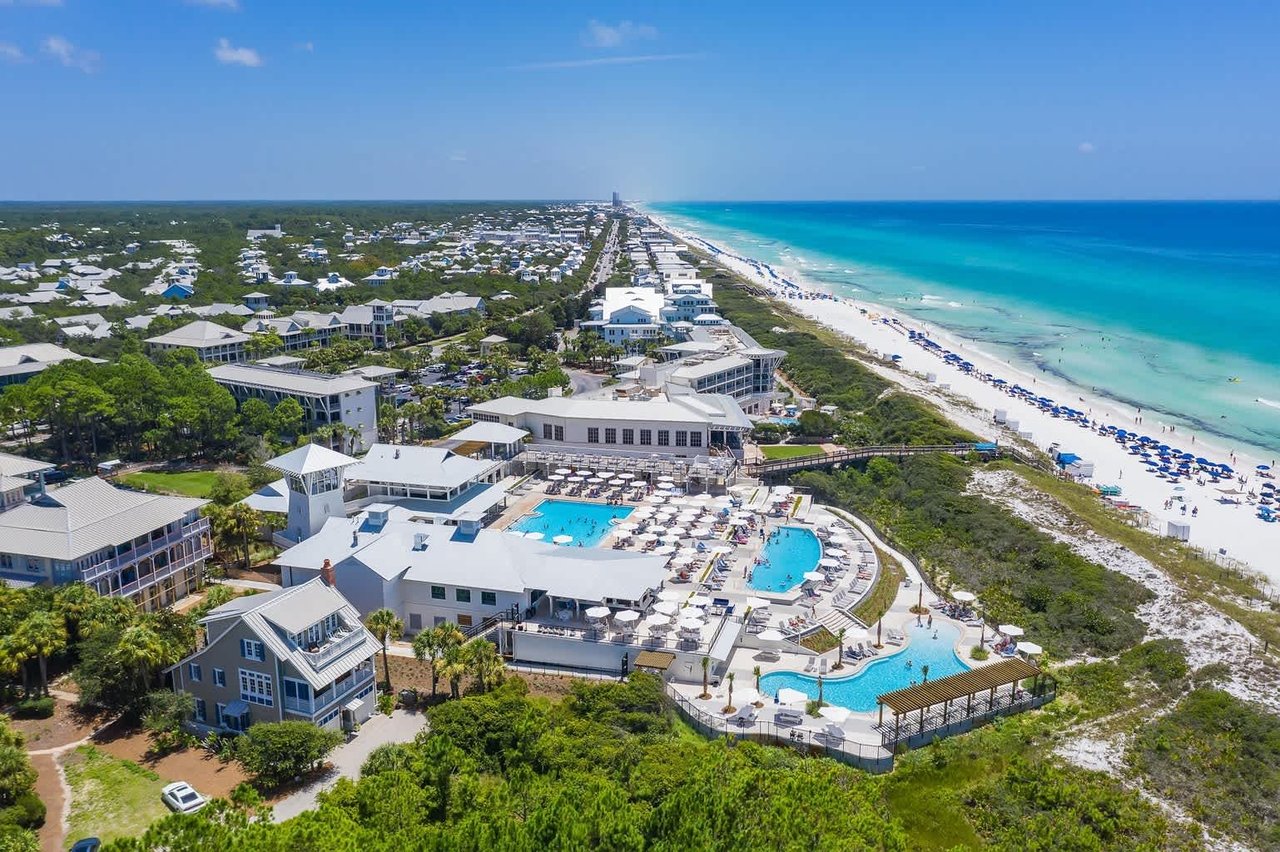
Thousands of buyers from Dallas, Atlanta, Nashville, and Birmingham purchase second homes on Florida’s Scenic Highway 30A every year, often without setting foot in the state until closing week. The Richards Group works with out-of-state buyers regularly, and the process is more straightforward than most people expect. This post walks through each step so you know exactly what to prepare for.
Whether you’re looking for a vacation retreat in Inlet Beach, a rental investment in Watersound, or a family beach house in Watercolor, the buying process from another state follows a predictable path. Here’s how it works.
Out-of-State Buyer Checklist for 30A
☐ Define your property goals (personal use, rental income, or both)
☐ Determine your expected usage (weeks per year) and any relocation plans
☐ Hire a local 30A-specialized agent like The Richards Group
☐ Get pre-approved with a lender familiar with 30A and second-home/investment loans
☐ Prepare proof-of-funds letter (if paying cash)
☐ Set up a custom MLS search portal with your agent
☐ Review video walkthroughs and narrow your list
☐ Plan a 2–3 day visit and tour shortlisted properties in person
☐ Confirm HOA rules and rental restrictions for your target community
☐ Submit your offer and earnest money deposit electronically
☐ Schedule a home inspection with a Florida-licensed coastal construction inspector
☐ Complete a wind mitigation inspection
☐ Verify FEMA flood zone designation
☐ Shop for homeowners, wind, and flood insurance (get multiple quotes)
☐ Close remotely with a mobile notary or in person
☐ Hire a local property management company (if renting)
☐ Obtain DBPR vacation rental license and Walton County Vacation Rental Certification
☐ Transfer utilities (power, water, internet, trash) into your name
☐ Set up lawn care, pool maintenance, and hurricane preparedness plan
☐ Consult a tax professional on deductions and Florida residency benefits
Step 1: Define your goals before you search
The first question isn’t about price or location. It’s about purpose. How you plan to use the property determines everything from the community you choose to the loan product you qualify for. A home you’ll use ten weekends a year looks different from one you’ll rent 200 nights a year.
Ask yourself three things: Will this be a personal retreat, a rental property, or both? How many weeks per year do you plan to use it? And is there any chance you’ll relocate to 30A full-time within the next five years? Your answers shape the type of property, the financing, and the community rules that matter most.
|
Local Tip: Some 30A communities like Alys Beach and parts of Watersound restrict short-term rentals entirely. If rental income is part of your plan, confirm the HOA rules before you fall in love with a property. |
Step 2: Choose a local agent who knows 30A
The single most important decision you’ll make is hiring an agent who works the 30A corridor daily, not someone who covers all of Northwest Florida from Pensacola to Panama City. The communities along 30A each have their own architectural review boards, HOA structures, rental policies, and pricing dynamics. An agent who specializes here like those at The Richards Group will know which streets flood, which HOAs are raising assessments, and which properties are about to hit the market.
For out-of-state buyers, your agent is also your eyes and ears on the ground. They’ll conduct video walkthroughs, flag maintenance issues a listing photo won’t show, and coordinate inspections and appraisals when you can’t be there in person. Look for an agent like with deep transaction volume in your target communities, whether that’s Rosemary Beach, Alys Beach, or anywhere along the corridor.
Step 3: Get pre-approved with a lender who handles 30A transactions
Second-home financing is different from primary-residence financing. Expect a minimum down payment of 10% to 20%, slightly higher interest rates, and stricter debt-to-income requirements. For luxury properties above the conforming loan limit (currently $766,550 in Walton County), you’ll need a jumbo loan, which comes with its own underwriting standards.
Many 30A transactions are cash purchases, particularly at the higher end. If you’re paying cash, you’ll still want a proof-of-funds letter ready before submitting an offer. Cash offers move faster and often win in multiple-offer situations, which are common in desirable 30A communities.
If you intend to generate rental income, tell your lender upfront. Investment property loans carry different terms than second-home loans, and misclassifying the property can create problems at closing. A local mortgage broker familiar with Walton County transactions is worth the phone call.
Step 4: Search remotely, then visit strategically
You don’t need to fly to Florida to start your search. Your agent can set up a custom property search portal that sends you new listings matching your criteria the moment they hit the MLS. Video tours, FaceTime walkthroughs, and drone footage are standard for out-of-state buyers on 30A.
When you’ve narrowed your list to three or four serious contenders, plan a focused trip. Most out-of-state buyers visit for two to three days, tour their shortlisted properties in person, and make an offer before heading home. The Northwest Florida Beaches International Airport (ECP) in Panama City Beach is less than 30 minutes from most 30A communities, and Destin-Fort Walton Beach Airport (VPS) is another option on the western end.
|
Local Tip: If you’re visiting during peak season (March through August), book accommodations early. Traffic on 30A and Highway 98 is significantly heavier during summer, so schedule your property tours in the morning to see each community at its most realistic pace. |
Step 5: Make an offer and negotiate
Florida uses standardized purchase contracts (FAR/BAR or AS-IS), and everything is handled electronically. You can review, sign, and submit an offer from your kitchen table using DocuSign or a similar platform. Your agent will advise you on offer price, contingencies, and earnest money based on current market conditions in the specific community you’re targeting.
Earnest money deposits on 30A typically range from 1% to 5% of the purchase price and are held in escrow by the title company. In competitive situations, a larger deposit signals serious intent. Your agent will help you structure an offer that protects you while remaining attractive to the seller.
Step 6: Inspections, insurance, and due diligence
Once your offer is accepted, the due diligence period begins. For 30A properties, this phase carries a few considerations that out-of-state buyers should prepare for:
-
Home inspection: Hire a licensed Florida inspector familiar with coastal construction. Salt air, humidity, and hurricane-code compliance all require specific expertise. Your agent can attend the inspection on your behalf and walk you through the findings via video.
-
Wind mitigation inspection: This separate report documents hurricane-resistant features in the home (roof straps, impact windows, etc.) and can significantly reduce your insurance premiums. Get this done during the inspection period.
-
Flood zone verification: FEMA flood zone designations affect insurance requirements and costs. Properties south of Highway 98 are often in higher-risk zones. Your agent and title company will confirm the zone designation, and your lender may require flood insurance.
-
Insurance quotes: Start shopping for homeowners, wind, and flood insurance immediately after going under contract. Florida’s insurance market has been volatile in recent years, and premiums vary widely depending on the property’s location, age, and construction. Get multiple quotes early so there are no surprises before closing.
Step 7: Close remotely or in person
Florida allows remote closings. If you can’t travel for closing day, a mobile notary can meet you wherever you are to execute the documents. The title company coordinates everything, and your agent will confirm that all final walkthrough items are resolved.
Closing costs in Florida typically run 2% to 4% of the purchase price and include title insurance, recording fees, documentary stamp taxes, and prorated property taxes. Your agent will provide a detailed estimate early in the process so you can budget accordingly. In Walton County, it’s customary for the seller to pay for the owner’s title insurance policy, though this is negotiable.
Step 8: Set up the property after closing
Once you have the keys, there’s a short list of items to handle, especially if you’re managing the property from another state:
-
Property management: If you plan to rent, hire a local management company that handles guest bookings, cleaning, maintenance, and emergencies. Interview at least two or three before committing.
-
Vacation rental licensing: Florida requires a DBPR vacation rental license if you rent more than three times per year for stays under 30 days. Walton County also requires a Vacation Rental Certification. Your management company can walk you through both.
-
Utilities and services: Transfer power, water, internet, and trash service into your name. Set up a local lawn care service and, if the property has a pool, a pool maintenance company.
-
Hurricane preparedness: Have a plan for securing the property during storm season. Your property manager should know the protocol, including shuttering windows, moving outdoor furniture, and turning off water if an evacuation is ordered.
What makes buying on 30A different from other Florida markets
If you’ve bought property elsewhere in Florida, 30A will feel familiar in some ways and very different in others. The communities here are tightly planned with architectural controls, and each one operates almost like a small town with its own rules, fees, and culture. Rosemary Beach bans golf carts. Alys Beach has strict architectural review for any exterior modification. WaterColor offers resort-level amenities with corresponding HOA dues.
The buyer pool on 30A also skews heavily toward cash and second-home purchasers, which means the market responds to different forces than a primary-residence market. Interest rate changes, for example, tend to have less impact on 30A pricing because fewer buyers are rate-sensitive. Supply is the bigger driver: there’s a finite amount of beachfront land, and the communities themselves limit density through their design.
Top feeder markets for 30A second-home buyers
30A draws buyers from a consistent set of metro areas. Proximity, flight access, and no state income tax are the primary magnets.
|
Metro Area |
Drive Time |
Nearest Airport |
|
Atlanta, GA |
~5.5 hours |
ECP or VPS |
|
Dallas, TX |
~9 hours (most fly) |
ECP direct |
|
Nashville, TN |
~6.5 hours |
ECP or VPS |
|
Birmingham, AL |
~4.5 hours |
ECP or VPS |
|
Houston, TX |
~9 hours (most fly) |
ECP direct |
|
Charlotte, NC |
~8 hours (most fly) |
ECP |
Tax advantages to keep in mind
Florida has no state income tax, which is a significant draw for buyers from high-tax states like New York, California, Illinois, and New Jersey. If you eventually establish Florida residency by spending more than 183 days per year in the state, you can claim Florida as your tax domicile and potentially avoid state income tax on investment income, retirement distributions, and capital gains.
Second-home mortgage interest is generally deductible if you itemize, subject to the combined $750,000 mortgage interest deduction cap. If you rent the property, you may be able to deduct operating expenses including property management fees, insurance, repairs, and depreciation. A tax professional who understands both your home state’s rules and Florida’s should be on your team from the start.
Frequently asked questions
Do I need to be in Florida to close on a property?
No. Florida permits remote closings, and a mobile notary can meet you anywhere in the country to execute the documents. Many out-of-state 30A buyers close without traveling to Florida.
How much should I budget for annual carrying costs on a 30A property?
It depends on the community and property type, but a reasonable estimate is 2% to 4% of the purchase price per year. That includes property taxes (roughly 1% of assessed value in Walton County), homeowners and flood insurance, HOA dues, maintenance, and property management if applicable.
Can I use rental income to qualify for a mortgage?
Some lenders allow projected rental income to offset the mortgage payment when qualifying for a second home or investment property loan. You’ll typically need a rental projection from a licensed property manager or documented rental history if the home has been previously rented. Requirements vary by lender, so ask early in the process.
What’s the difference between buying as a second home vs. an investment property?
The classification affects your loan terms. Second-home loans typically require 10% to 15% down and carry rates close to primary-residence rates. Investment property loans require 20% to 25% down and carry higher rates. Your lender will determine the classification based on how you intend to use the property.
How long does the buying process take from start to finish?
If you’re pre-approved and ready to move, the process from accepted offer to closing typically takes 30 to 45 days for financed purchases and as few as 14 to 21 days for cash transactions. The search phase varies, but many out-of-state buyers find their property within one to two visits.
Ready to start looking at properties on 30A? The Richards Group works with out-of-state buyers every week and can set up a custom search portal tailored to your goals. Whether you’re exploring Inlet Beach luxury properties or comparing communities across the corridor, reach out to start the conversation.
