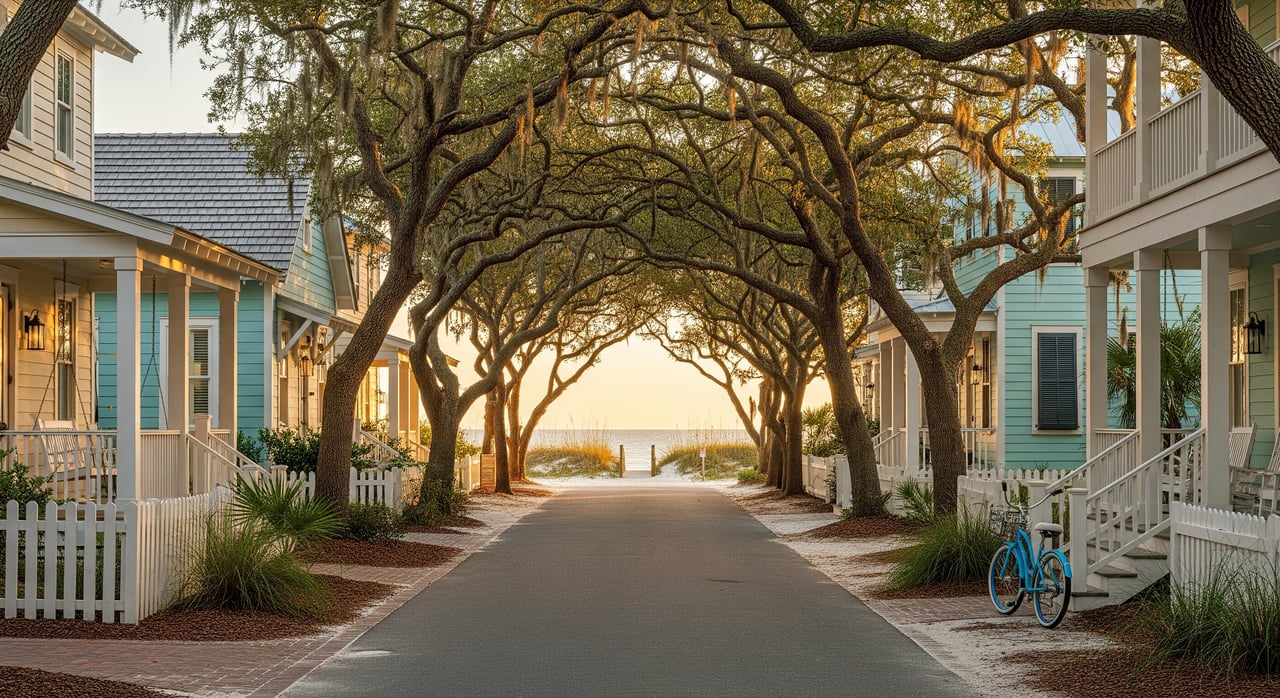
Imagine parking your car for the week and never missing it. If you’re weighing a beach home where you can walk to the sand, coffee, and dinner, Seaside on 30A makes that vision feel real. Still, everyday life has practical needs, from groceries to school runs. In this guide, you’ll learn how Seaside’s design supports a car-light lifestyle, where you’ll still want wheels, and a simple checklist to test a specific home’s walkability before you buy. Let’s dive in.
Why Seaside feels walkable
Seaside was planned around people, not cars. As one of the early models of New Urbanism, its compact layout, narrow streets, and human-scale buildings put daily destinations within easy reach on foot. Front porches, stoops, and frequent intersections create a lively public realm that invites you outside.
Most homes sit within a short walk of beach boardwalks and the central square. You can stroll to cafés, small markets, and boutiques that ring the amphitheater-style lawn. The result is simple: routine leisure and many daily needs feel effortless without a car.
Getting around on foot and bike
Sidewalks, street trees, and on-street parking work together to slow traffic. Crosswalks and visual cues further prioritize pedestrians at key intersections. You feel it when you walk the neighborhood. Speeds are calmer and distances are short.
Timpoochee Trail connections
For longer trips, the Timpoochee Trail runs along Scenic Highway 30A, connecting Seaside to neighboring communities over roughly 18 to 19 miles. It’s a paved, multi-use path that makes biking to places like WaterColor, Grayton Beach, or Alys Beach practical without mixing with highway traffic.
Sidewalks and traffic calming
Short blocks and frequent intersections make walking routes direct. You can choose quieter side streets when the main sidewalks fill up, especially during festivals and weekends. Families often use bikes and trailers for beach runs and quick errands because the built environment supports it.
Golf carts and low-speed vehicles
Golf carts and low-speed vehicles are part of daily life across South Walton, including Seaside. They are convenient for short trips to the beach, the town center, or a friend’s house. Many vacation renters use them too.
Rules vary by jurisdiction and road type, so you’ll want to confirm where carts are allowed, who can drive them, speed limits, and equipment requirements like lights and seat belts. Insurance and registration can also apply. If you plan to own or rent a cart, check Walton County ordinances, Seaside rules, and any HOA covenants for your street.
Even where carts are allowed, they do not fully replace a car. Trunk space is limited, and errands that take you off 30A to larger stores or medical services still favor a vehicle.
Daily errands: what you can walk to
Seaside’s town center includes cafés, restaurants, and specialty shops that cover many day-to-day needs. You can easily walk for morning coffee, a casual lunch, beach essentials, and evening treats. The central lawn often becomes the start and end point of your daily loop.
This pattern supports a relaxed, car-light routine. When you’re in residence, you might go days without turning the ignition because your most frequent destinations are within a short walk or bike ride.
What still requires a car
Full-service grocery stores, big-box shopping, and a wide range of medical services sit outside Seaside. Most residents drive about 10 to 20 minutes for larger stock-up trips or specialized care. If you plan regular appointments or treatments, map those routes as part of your decision.
Public transportation in the immediate area is limited. Seasonal shuttles, private services, and rideshare help during busy months, but day-to-day, residents rely on walking, biking, carts, and private vehicles.
Families: schools, strollers, safety
If you’re relocating with school-age children, review Walton County School District zones, bus routes, and any private school options you’re considering. Some families love the walkable neighborhood and easy access to outdoor activities. Others find that school commutes and extracurriculars call for reliable car access.
Sidewalks, crosswalks, and the Timpoochee Trail make stroller walks smooth around town. Beach entries vary. Boardwalks and dune crossings can include steps or soft sand, so many families use beach carts once they hit the dunes.
Street design and traffic calming support pedestrian safety. During peak season, there are more interactions among cars, bicycles, and people. Use standard caution at crossings and supervise children near streets and trail junctions.
Seasonal rhythms and crowd patterns
From Memorial Day through Labor Day and on holiday weekends, visitor numbers swell. The upside is a lively pedestrian scene and a full calendar. The tradeoff is slower walking speeds, fuller sidewalks, and scarcer parking.
If you prefer a quieter, everyday rhythm, evaluate walkability in the off-season as well. You’ll get a more balanced picture of travel times, noise, and the feel of your block morning, afternoon, and evening.
Buying near the action: premium and tradeoffs
Homes closest to the square and the beach often carry a premium for their walkable access. For second-home owners and investors, that proximity also serves as a meaningful rental selling point. For full-time residents, it can reduce weekly driving and simplify daily routines.
Seaside includes a high proportion of vacation rentals and second homes. That mix shapes neighborhood patterns, from parking and foot traffic to evening activity. If you prefer a steadier, year-round feel, review HOA rules and neighboring properties’ use to confirm the fit.
A practical walkthrough before you buy
Use this quick process to test whether a specific home will support the lifestyle you want:
- Walk or bike your likely routes on a weekday, a weekend, and during peak season. Note crowding, travel times, and where you feel most comfortable.
- Confirm golf cart and low-speed vehicle rules with Walton County, Seaside, and your HOA. If you want a charger or storage, verify design guidelines and approvals.
- Identify your essentials and measure drive times: full grocery store, pharmacy, urgent care or hospital, school, and any regular activities.
- Ask about short-term rental activity on the block. Understand parking rules, guest capacity, and how peak periods change the street feel.
- Talk to neighbors or local property managers about seasonal patterns, festival weekends, and tips for smoother routes on busy days.
- Check current walkability, bike, and transit indicators for the address and review county trail maps for the best path connections.
Is a car-light lifestyle right for you?
Many Seaside owners choose a hybrid model: one car for bigger errands and regional trips, plus walking, biking, and a golf cart for daily local mobility. Fully car-free living is possible for some households, especially if you prioritize proximity to the town center and beach and can arrange rides for larger trips.
The key is alignment. If your must-haves are within a short walk or bike ride and you’re comfortable planning occasional drives, Seaside’s design makes the rest easy. If you expect frequent medical appointments, off-30A commutes, or large weekly shopping runs, keeping a car will likely feel practical.
Work with a local advisor
Choosing a walkable home in Seaside is about more than the map. It is about block-by-block nuance, seasonal rhythms, and how you plan to use the property. You deserve guidance that blends lifestyle insight with smart acquisition strategy.
If you want help identifying addresses with true car-light potential, evaluating HOA rules, and weighing rental demand for walkable locations, connect with The Richards Group. Our team pairs boutique, white-glove service with deep 30A expertise to help you buy with confidence.
FAQs
Is Seaside, Florida walkable year-round?
- Yes, the town’s compact layout and pedestrian-focused streets support walking year-round, though peak seasons bring heavier foot and bike traffic that can slow travel times.
How does the Timpoochee Trail help Seaside residents?
- It provides a paved, off-road route along 30A, connecting Seaside to nearby communities for longer bike or walk trips across roughly 18 to 19 miles.
Are golf carts allowed on all streets in Seaside?
- Rules vary by road and jurisdiction; confirm permitted routes, driver requirements, equipment needs, and any registration or insurance with Walton County, Seaside, and your HOA.
Can I run daily errands in Seaside without a car?
- Many leisure and small errands are walkable in the town center, but full-service groceries and broader medical services are outside Seaside and typically require a short drive.
What should families know about schools and logistics in Seaside?
- Review Walton County School District zones and transport; some families walk and bike daily, but school and activity commutes often make a car convenient.
Is the beach easily accessible with a stroller in Seaside?
- Town sidewalks are stroller-friendly, but some boardwalks and dune crossings include steps or soft sand; many families use beach carts once on the dunes.
Does buying closer to Seaside’s square affect value or rentals?
- Homes near the town center and beach often command a premium and can be attractive for short-term renters seeking a walkable stay; weigh benefits against cost and seasonal activity.
