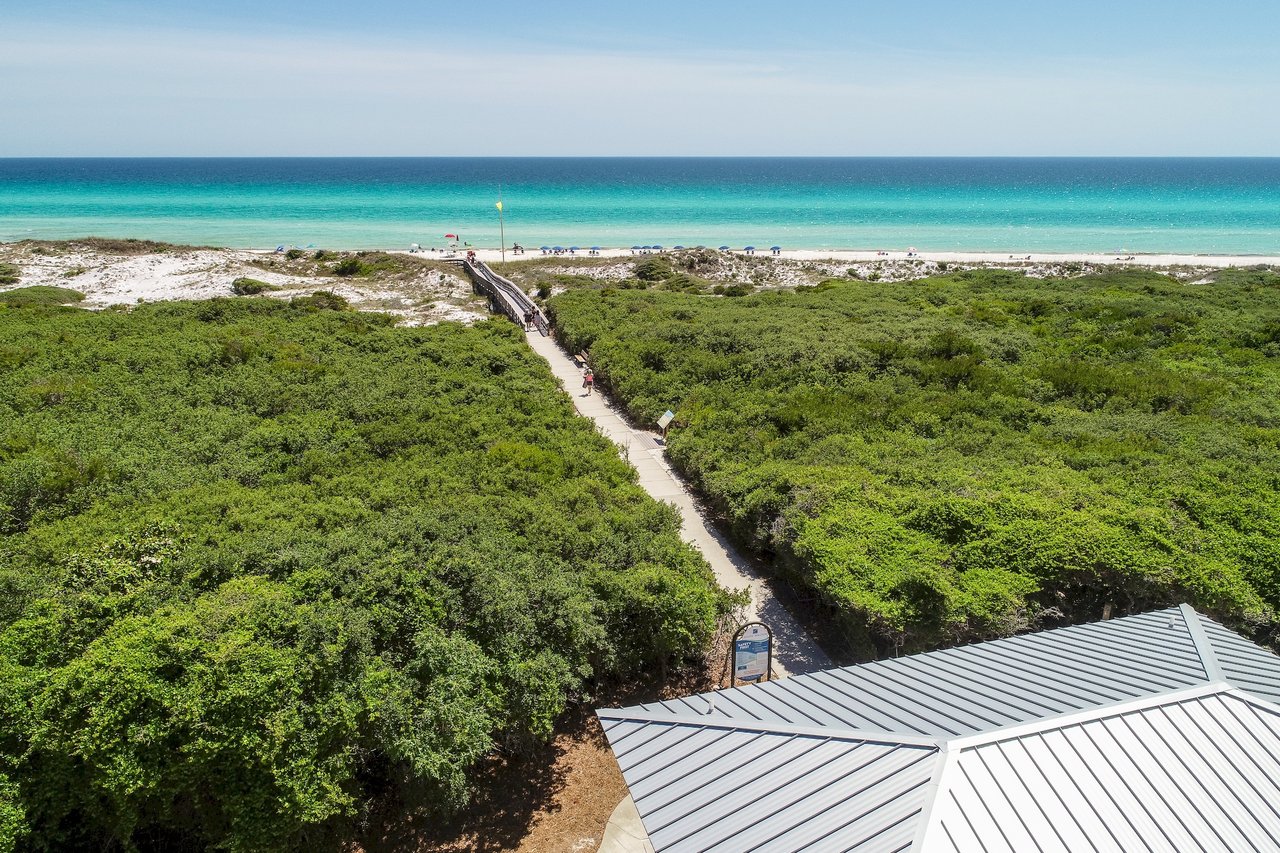
For years, the advice for a morning at Camp Helen State Park was simple enough to repeat without thinking: drive in, pay the gate fee, rent a kayak, and paddle out onto Lake Powell before the day gets hot. That advice is now wrong. As of May 13, 2026, Camp Helen stopped offering kayaks for rent on site. If your plan for a Saturday morning in Inlet Beach still assumes you can show up empty-handed and rent a boat at the gate, you're working from an outdated map.
That single change reorders the whole loop that locals here have quietly run for years: paddle Lake Powell at first light, hike back through the dune trails, and finish with a swim or a snorkel out to the reef off the Regional Beach Access. None of those pieces disappeared. But the mechanics of doing them well just shifted, and the difference matters if you actually live here and plan to keep doing this on a normal Tuesday, not just during a vacation week.
The Reef Locals Actually Use
Start with the water everyone already knows about, even if they've never been told exactly where to look. Off the Inlet Beach Regional Beach Access, about 970 feet from shore, sits an artificial reef built from 94 individual concrete and limestone modules shaped, when viewed from above, like a grouper. Most people who've lived here more than a summer call it the Cobia Reef out of habit, but the South Walton Artificial Reef Association lists it as the Grouper Reef, installed in 2017.
The way you find it hasn't changed: walk down to the South Orange Street access, look for two tall yellow poles planted at the base of the dune, and line yourself up with them. That's the marker system SWARA uses across its near-shore reef sites, and it's the same low-tech method locals have used since the reef went in.
What's worth knowing is how this reef compares to the other three SWARA built between Miramar Beach and Grayton Beach. The Grouper Reef off Inlet Beach is the farthest offshore of the four:
Reef | Location | Distance offshore | Modules | Installed |
|---|---|---|---|---|
Dolphin Reef | Miramar Beach | ~685 ft | 79 | Summer 2017 |
Seahorse Reef | Topsail Hill State Park | ~715 ft | 78 | — |
Sea Turtle Reef | Grayton Beach State Park | ~783 ft | 58 | Summer 2015 |
Grouper Reef | Inlet Beach | ~970 ft | 94 | Summer 2017 |
That extra distance is why most people who swim it comfortably still bring a paddleboard or kayak rather than trying to swim the full 970 feet round trip, especially with kids. SWARA's president, Andy McAlexander, has described the goal of these installations as building a "living educational resource," and the density of marine life at Grouper Reef, the largest of the four by module count, backs that up. If you want a guided version with gear included, Snorkel 30A runs small group tours out to it and takes children as young as eight.
What Actually Changed in May
Here's the part that changes the plan. Camp Helen's own kayak and paddleboard rental program, which for years let you show up without your own equipment and still get on Lake Powell, ended in May 2026. The park's website is direct about it: kayaks are not offered for rent at Camp Helen State Park, effective May 13.
That's not a small operational footnote. Lake Powell is the reason most people drive out to Camp Helen in the first place. It's Florida's largest coastal dune lake, a rare brackish body of water bordered by the park on three sides, and the calm, protected paddling it offers is genuinely different from anything you'll find on the Gulf side of the highway. Losing the on-site rental option means the easy, spontaneous version of that morning is gone. What replaces it is a plan that requires you to either own your own paddlecraft or check ahead.
The park still maintains two kayak launch points on the lake, both accessed from the lakeshore trails south of US 98. What's missing is the equipment waiting for you when you get there. The nonprofit Friends of Camp Helen is the group to check before you drive out, since paddlecraft availability through them can shift by season.
Timing the Water Right
If you're bringing your own kayak or paddleboard, the timing that locals have settled on isn't complicated: get on Lake Powell early, before the wind picks up. Flat water in the first hour or two after sunrise means you'll see wading birds working the shallow margins and get a still reflection off the lake surface that disappears once the afternoon breeze sets in. The lake supports both freshwater and saltwater species in the same brackish water, so depending on season and where you fish along the margins, you can pull redfish, speckled trout, and flounder alongside largemouth bass, all from the same launch point.
Neither the Gulf beach nor Lake Powell has a lifeguard on duty, so this is a bring-your-own-judgment kind of morning, not a supervised one. Check the flag conditions at the Gulf beach before swimming, and give the Phillips Inlet channel a wide margin if you're in the water near it.
The Trail Side of the Loop
The paddling gets the attention, but the trail network at Camp Helen is worth the walk on its own, especially if you're bringing a dog. Leashed dogs are welcome on the full trail system, including the North Trail and the Lake Powell Trail, though not on the Gulf beach itself, a restriction in place to protect nesting shorebirds along the sandy bluffs near the inlet.
The North Trail runs along Lake Powell's shoreline for nearly half its length before connecting to the Lake Powell Trail, which stays low along the bluffs and passes the kayak launch and an old pier on its way to the Inlet Beach Trail. That last stretch crosses a causeway over a marshy arm of the lake before climbing through the dunes toward the Gulf, and it's the one section that catches people off guard. The path involves a bluff descent, the causeway crossing, and a soft sand approach through the dunes. Beach mats cover the worst of it, but plan on wearing shoes for that stretch and carrying them once you hit the waterline.
The reward for the walk is a set of 1930s log-and-stone cottages and a lodge that once served as a company retreat for employees of Avondale Mills, an Alabama textile company that ran the property as a resort from 1945 until 1987. Some of those buildings have since been restored, and the state park runs ranger-led historical tours and guided nature hikes on a recurring schedule, with the next nature hike set for September 3, 2026. Prehistoric shell middens and mounds found within the park indicate people were using this land more than 4,000 years ago, long before the mill workers or the state park designation.
Entry runs $4 per vehicle or $2 for a cyclist or pedestrian, unchanged from what regulars have paid for years.
What This Means for a Normal Saturday
None of this changes whether Inlet Beach is a good place to spend a morning outdoors. It still is. What changed is the assumption baked into a decade of "just show up" advice. The version of this loop that worked in 2024 or early 2025, where you could drive to Camp Helen with nothing but a towel and rent whatever you needed at the gate, no longer applies to the paddling half of the day. The reef, the yellow poles, the trails, and the old lodge buildings are all exactly where they've always been. The only thing missing is the boat you used to be able to borrow when you got there.
If you're planning to make this a regular routine rather than a one-time outing, the practical move is to either invest in your own kayak or paddleboard, or check with Friends of Camp Helen before you drive out expecting equipment to be waiting.
Living well in a place like this comes down to details like these, the small operational shifts that a "top ten things to do" list won't catch but that change how your actual weekend goes. That kind of local read is what Allison Richards and The Richards Group bring to every conversation about this stretch of the coast, whether you're asking about a morning at Camp Helen or where to settle in for the long run. Elevate your 30A experience and connect with Allison Richards when you're ready to talk about more than the trail map.
