
NEIGHBORHOOD GUIDE
Four Mile Village
A Hidden, History-Rich Enclave on 30A's Western End
Four Mile Village is one of the smallest and most private communities on Scenic Highway 30A — fewer than fifty homesites tucked between two protected natural areas in Miramar Beach, with a stretch of history unlike anywhere else on the coast. Before it was a residential community, this land was a classified World War II missile testing site; before that, it was Gulf-front pine forest bought by a Massachusetts attorney general. Today it's a gated enclave built around a coastal dune lake, bordered by a nature preserve on one side and a state park on the other, where oversized lots and enforced height restrictions keep the Gulf views — and the privacy — intact.
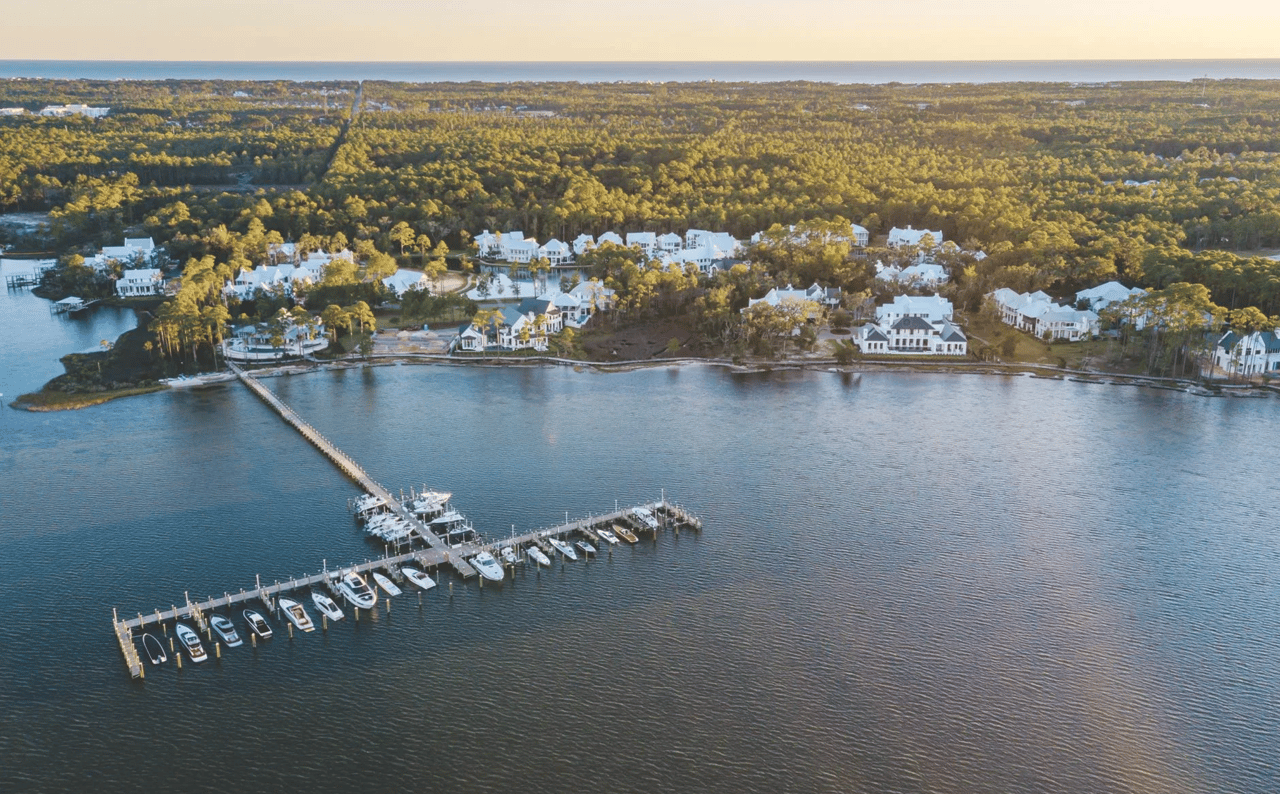
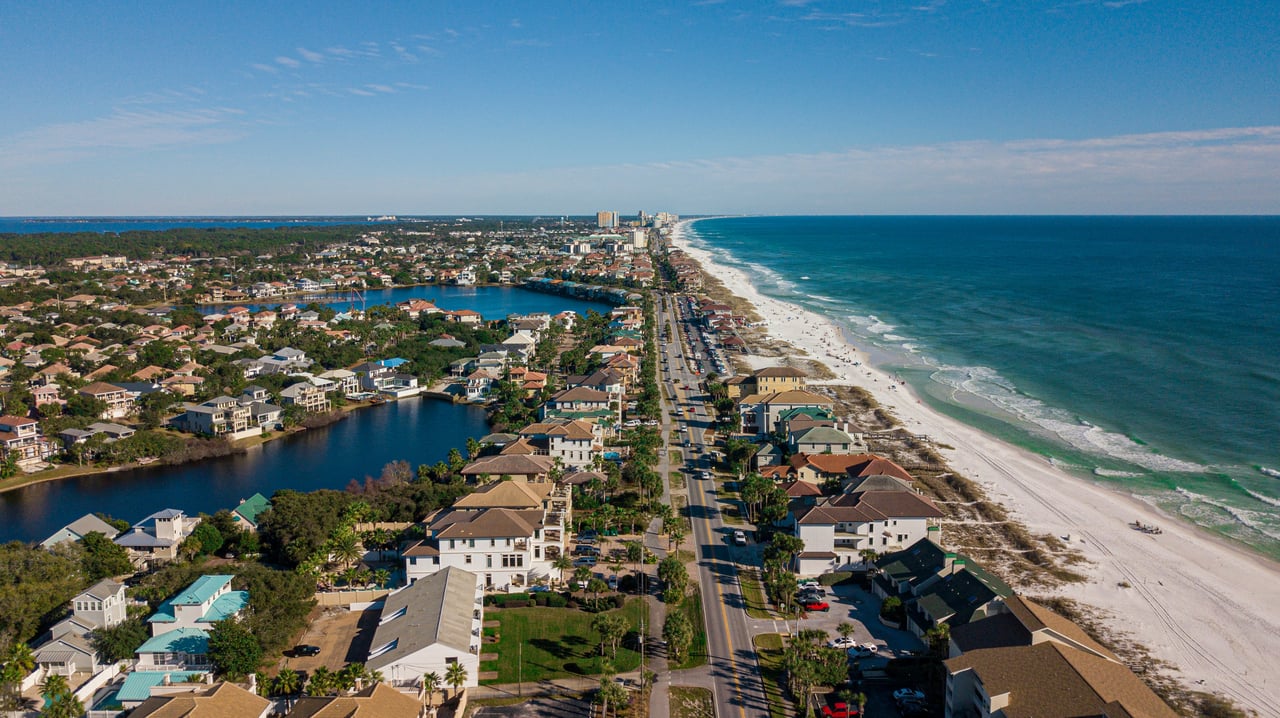
On 30A's western edge, in Miramar Beach, Walton County, this small enclave is boxed in on purpose: Topsail Hill Preserve State Park to the west, the Coffeen Nature Preserve to the east, and Fuller Lake, a 60-acre coastal dune lake, running through the middle. Coastal dune lakes like this one exist almost nowhere else in the world outside this stretch of the Florida Panhandle. The gated community stays intentionally small, with fewer than fifty homesites split between lakefront, Gulf-front, and oak-canopied wooded settings.
Sandwiched between two pieces of permanently protected land, this pocket of 30A is about as close to development-proof as a private community gets. That, more than anything, is what makes it quiet — there's simply nowhere left to build around it.
Four Mile Village's story starts just before World War II, when Massachusetts Attorney General Robert Bushnel purchased roughly 2,000 acres stretching from Choctawhatchee Bay to the Gulf of Mexico. During the war, Bushnel leased the land to the U.S. Army Air Force for one dollar a year for a classified missile-testing operation. Over 600 unarmed JB-2 missiles — American-built versions of the German V-1 “buzz bomb” — were test-launched from the property into the Gulf, some traveling up to 150 miles. Two original launching ramps and four control bunkers still stand on the property today, a strange and tangible link to that chapter of the coast's history.
After the war, the Bushnel family incorporated the land as Four Mile Village Inc. In 1976, Bushnel's sister, Dorothy Coffeen, donated 197 acres of the property to the Sierra Club Foundation, with the deed specifically requiring that the land's “natural beauty and characteristics” be preserved for education, conservation, and scientific purposes. That gift became the Coffeen Nature Preserve, and it's a large part of why the community still feels like undeveloped, old Florida today.
As the property was gradually developed into a residential community, some of the earliest homes were built in a style influenced by architect Walter Gropius and his students — a modernist, function-first design language that stood out from the more traditional coastal architecture going up elsewhere on 30A at the time. A number of those original homes are still standing.
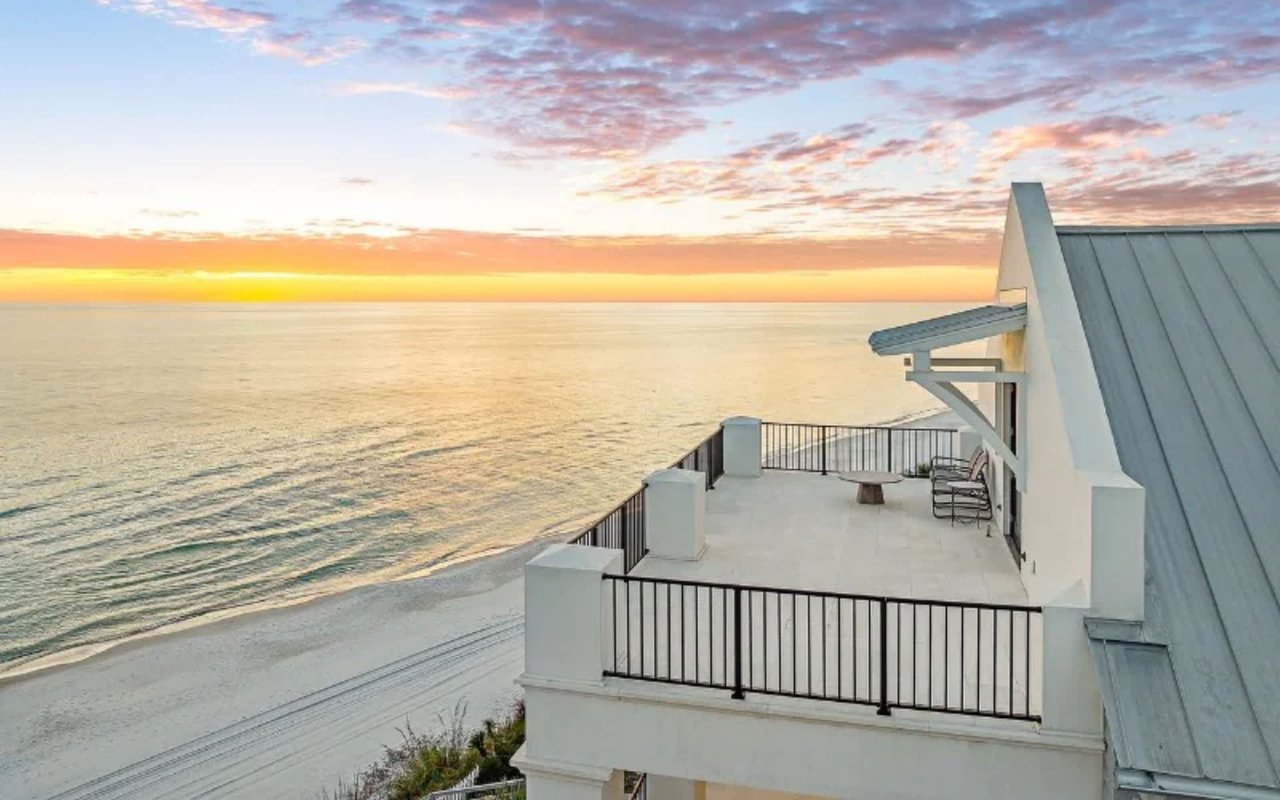
The lots do more work here than the houses. Fewer than fifty homesites make up the entire community, and they run oversized by 30A standards, with height restrictions written into the design guidelines specifically to protect Gulf views for every owner, not just the ones directly on the water. Homes fall into three general settings: directly on Fuller Lake, Gulf-front with unobstructed water views, or tucked into the oak-canopied wooded interior of the property.
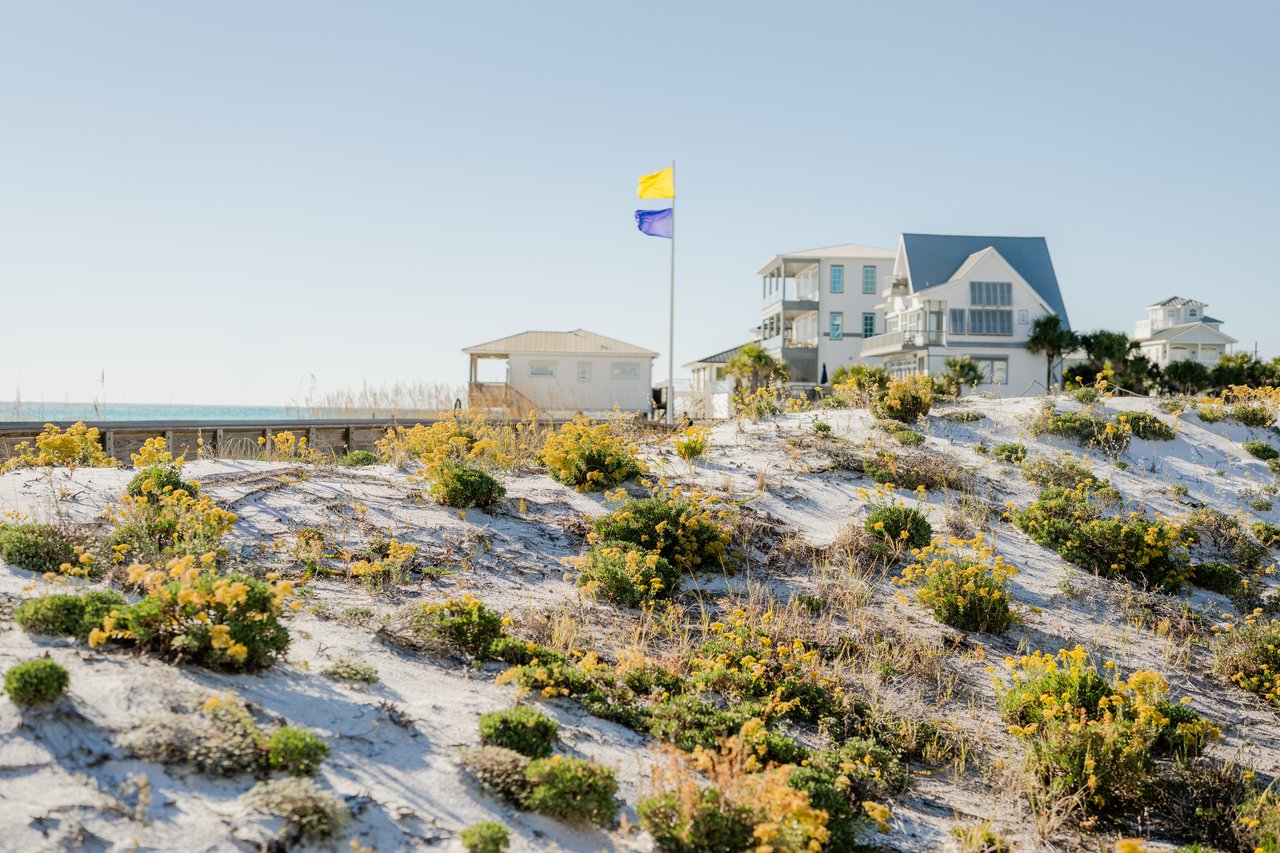
Architecturally, the community spans decades: a handful of original Gropius-influenced homes from its early development sit alongside larger, more recently built Gulf Coast estate homes with metal or shake roofing, deep porches, and glass designed to take full advantage of lake or Gulf views. Because much of the property backs up to protected preserve land, many lots retain their natural buffer of mature oaks and native vegetation instead of being cleared to the property line, which gives the streets an older, more settled feel than a typical new-construction community.
Short-term rentals are restricted throughout Four Mile Village, so the community is built around full-time residents and second homeowners rather than a rotating vacation-rental population.
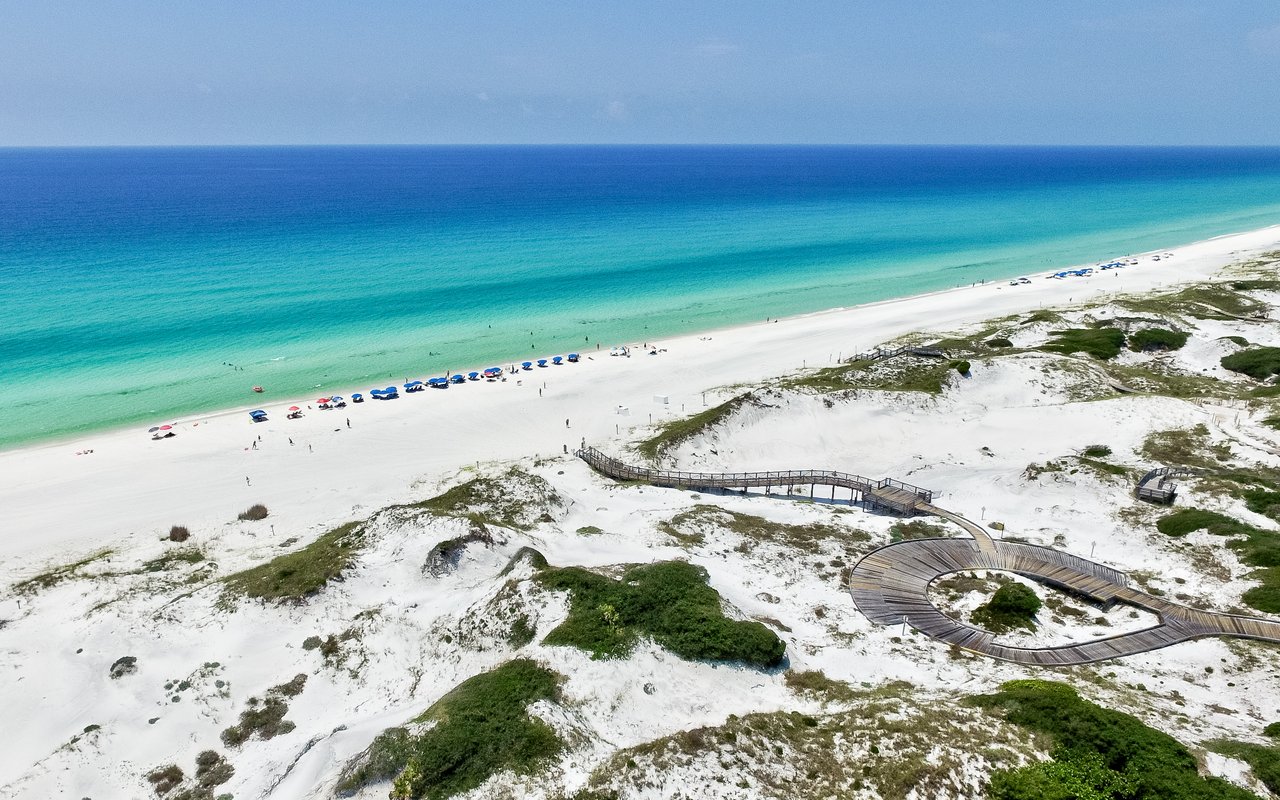
You don't have to leave the property line to find something worth exploring. The Coffeen Nature Preserve's 197 acres sit immediately to the east, protected in perpetuity for conservation and education. To the west, Topsail Hill Preserve State Park covers 1,643 acres and three miles of undeveloped beach, along with hiking and biking trails, camping, and several additional coastal dune lakes beyond Fuller Lake itself.
Residents reach the Gulf through what's known locally as “the gap,” an unusually wide beach access point that keeps the shoreline feeling open rather than squeezed between private lots. Fuller Lake itself offers kayaking and paddleboarding immediately outside many homeowners' back doors.
Walton County School District handles K-12 education here. Elementary students attend Van R. Butler Elementary School, middle schoolers attend Emerald Coast Middle School (grades 6-8), and high schoolers attend South Walton High School, home of the Seahawks.
There's no commercial center inside the gates, so daily errands and dinners out mean a short drive to Sandestin Golf and Beach Resort, where Baytowne Wharf offers restaurants, shops, and live entertainment along the harbor, and Grand Boulevard at Sandestin adds shopping, dining, and a movie theater a few minutes further on. The rest of Scenic Highway 30A, with its own restaurants, boutiques, and beach access points, is an easy drive east.
Miramar Beach puts this community at the western end of the 30A corridor, close to Sandestin and about 20 minutes from Destin. Northwest Florida Beaches International Airport is roughly 20 miles away, a manageable drive for owners flying in from out of town. There's no public transit nearby; residents get around by car or golf cart.
With fewer than fifty homesites, Four Mile Village functions less like a subdivision and more like a small, close-knit enclave. The visible remnants of its WWII missile-testing past — bunkers, launch ramps, and old barracks — sit alongside the conservation ethic instilled by the Coffeen family's 1976 gift, giving the community a stronger sense of place and history than almost any other address on 30A. It's a quiet counterpoint to the town-center energy of communities like Rosemary Beach or WaterColor just down the road.
Four Mile Village sits apart from 30A's more resort-style communities in both scale and character. The table below is a general, qualitative comparison, not a market analysis, meant to help buyers understand where to start their search.
Q. What was Four Mile Village used for during World War II?
A. The property served as a classified U.S. Army Air Force missile-testing site from 1944 to 1945. Over 600 unarmed JB-2 missiles were test-launched from the site into the Gulf of Mexico, and two launching ramps and four control bunkers are still visible today.
Q. Who was Dorothy Coffeen?
A. She was the sister of Robert Bushnel, the original landowner. In 1976 she donated 197 acres of the property to the Sierra Club Foundation to be preserved permanently for conservation, education, and science, creating what's now the Coffeen Nature Preserve.
Q. How many homes are in Four Mile Village?
A. Fewer than fifty homesites total, spread between lakefront, Gulf-front, and wooded interior settings.
Q. Is Four Mile Village gated?
A. Yes, the community is gated and intentionally low-density.
Q. Can you rent a home in Four Mile Village short term?
A. No, short-term rentals are restricted, so the community is made up mostly of full-time residents and second homeowners.
Q. What lake is in Four Mile Village?
A. Fuller Lake, a 60-acre coastal dune lake at the center of the community.
Q. Is Four Mile Village on the Gulf?
A. Yes, some homesites are Gulf-front with direct beach access through a wide local access point known as “the gap.”
Q. What school district serves Four Mile Village?
A. Walton County School District, including Van R. Butler Elementary, Emerald Coast Middle School, and South Walton High School.
Q. How far is Four Mile Village from the airport?
A. Northwest Florida Beaches International Airport is about 20 miles away.
Four Mile Village sits close to several other 30A neighborhoods worth touring, including Watersound, Watersound Beach, Watersound Camp Creek, and Rosemary Beach.
Custom alerts by neighborhood, price, beds, baths, and home features — unsubscribe anytime.
 Four Mile Village
 Watersound Beach
 Watersound Camp Creek
 Churchill Oaks
 30A
30A
 Santa Rosa Beach
 Panama City Beach
 Destin
 Origins at Camp Creek
 Gulf Trace
 The Retreat
 Seaside
 Grayton Beach
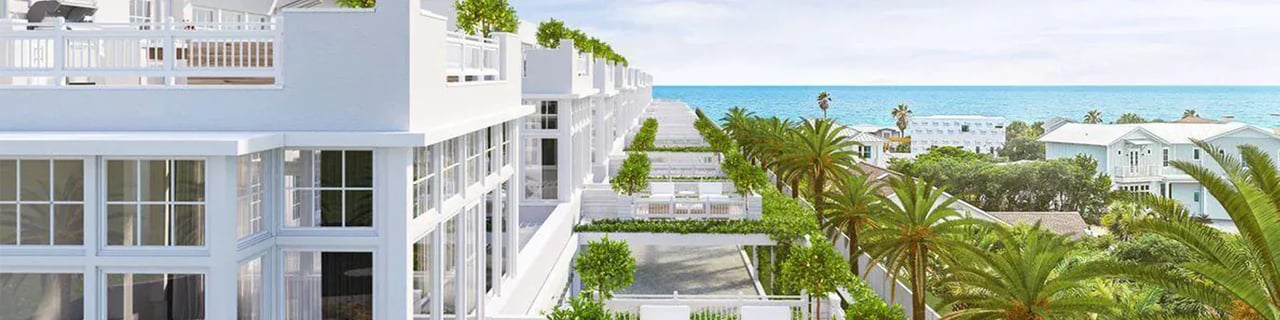 Kaiya Beach Resort
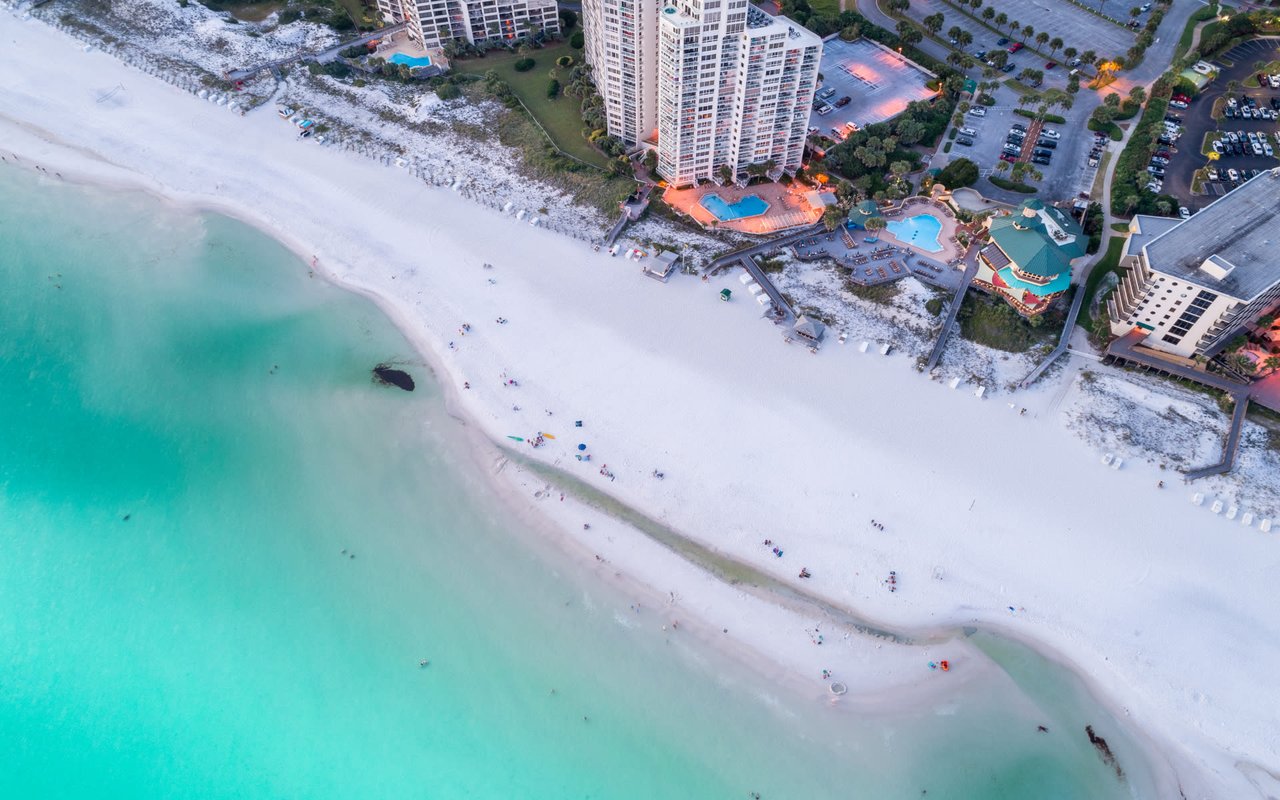 Sandestin
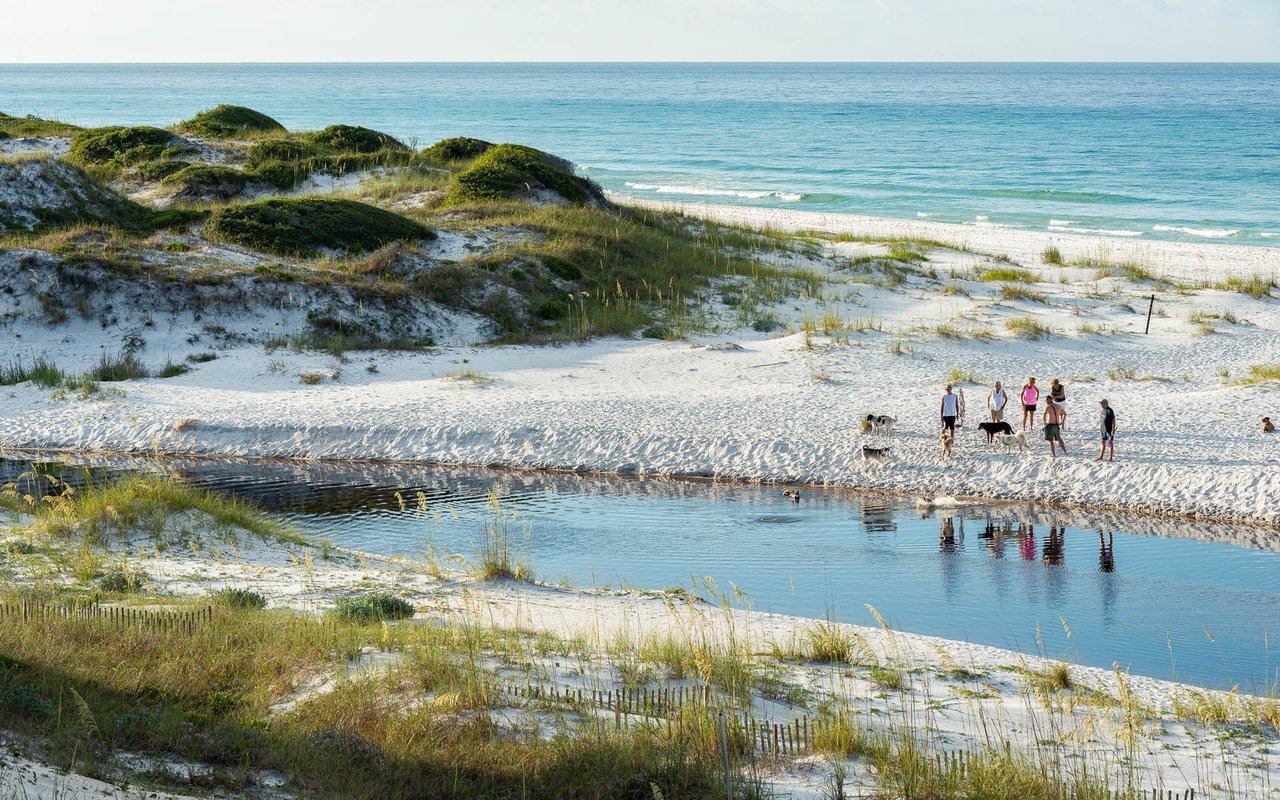 Dune Allen
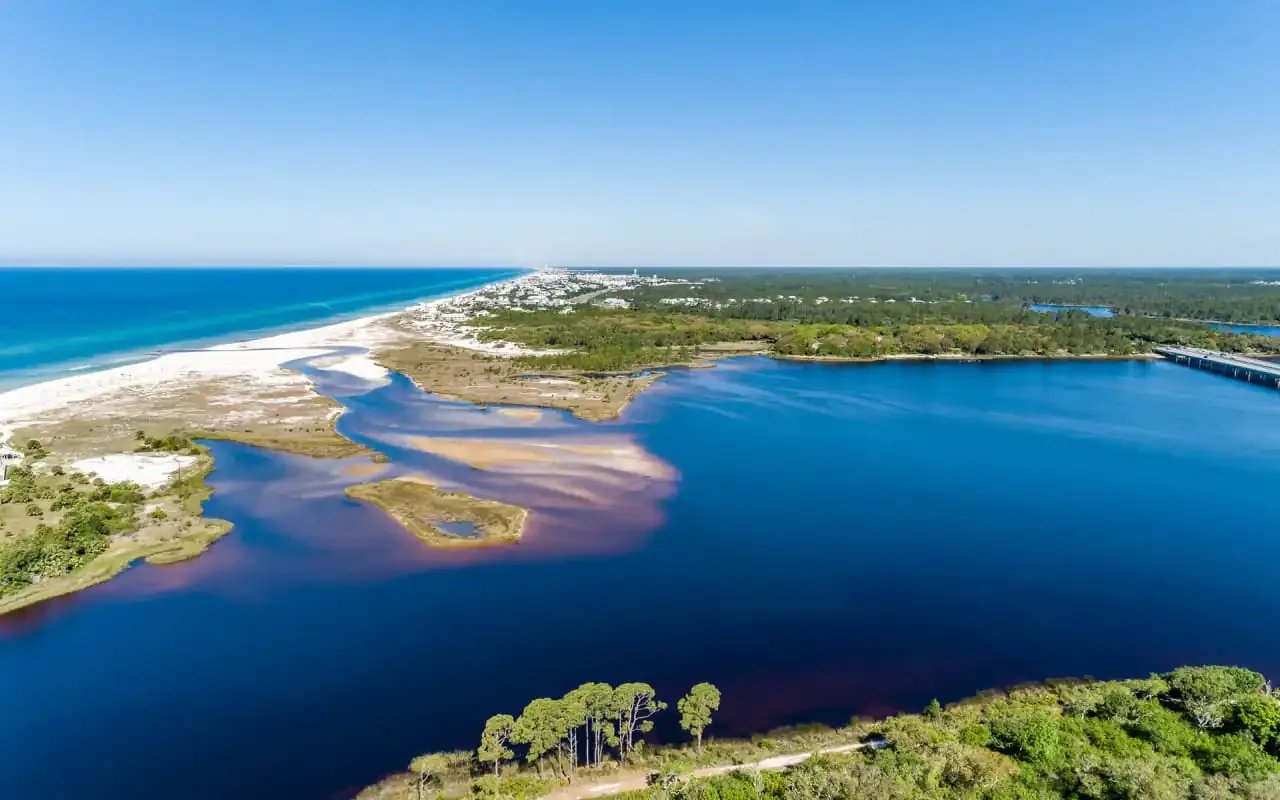 Inlet Beach
 Seagrove
 Miramar Beach (Bay Side)
 Rosemary Beach
 Watersound
 Alys Beach
 Seacrest
 Watercolor
 Blue Mountain Beach

ADDRESS 2048 W COUNTY HIGHWAY 30A STE 107
SANTA ROSA BEACH FL 32459
ADDRESS 2048 W COUNTY HIGHWAY 30A STE 107
SANTA ROSA BEACH FL 32459